
Crime Scene Cleanup
Cleanup and decontamination of blood and body-fluid contamination after authorities have released a scene. We handle remediation only, never investigation.
Compassionate Care. Professional Cleanup. 24/7 Response.
When blood, body fluids, or other biological contamination affect a home, business, or vehicle, the cleanup needs trained people, protective equipment, and a clear method. Since 2002, we have handled biohazard cleanup and decontamination across Houston calmly, discreetly, and with care for the people and property involved.
Definition
Biohazard cleanup is the professional removal, cleaning, and decontamination of biological contamination, such as blood, body fluids, and tissue, from a property, its contents, or a vehicle. It combines protective equipment, containment, careful removal of affected materials, and appropriate disinfection so that an area can be returned to a suitable condition for its intended use.
It is different from ordinary cleaning. Household products and methods are designed for everyday dirt. They are not designed for contamination that may carry bloodborne pathogens, that has soaked into porous materials, or that has spread beyond what is visible. A stain can be wiped away while the carpet pad, subfloor, or upholstery foam beneath it stays contaminated.
Professional biohazard remediation treats each affected area as a problem to map, contain, and resolve, not just a surface to wipe. The work often involves decisions about what can be cleaned and what must be removed, how to prevent contamination from spreading to unaffected rooms, and how contaminated waste should be packaged and disposed of.
Employers whose workers may be exposed to blood or other potentially infectious materials have obligations under OSHA's Bloodborne Pathogens Standard (29 CFR 1910.1030). Waste handling and disposal may also be subject to state and local requirements, depending on the material. We explain these points in plain terms during an assessment.
Services
Every incident is different, so each service below has its own page explaining the situations it covers, how the work is approached, and what to expect.
Cleanup and decontamination of blood and body-fluid contamination after authorities have released a scene. We handle remediation only, never investigation.
Quiet, compassionate cleanup of affected rooms, surfaces, and contents, so families do not have to face that work themselves.
Remediation of biological contamination following a violent incident, including affected materials and property contents, after the scene is released.
Decomposition-related contamination often reaches flooring, subfloors, and furniture. We address the affected materials and the odor they cause.
Cleanup of blood spills and body fluids on carpet, upholstery, hard surfaces, and contents, with each material assessed on its own terms.
Remediation after accidents, serious injuries, and other traumatic incidents at homes, workplaces, and commercial properties.
Cars, trucks, and fleet or commercial vehicles with blood or biological contamination in seats, carpeting, and hard-to-reach interior areas.
Focused decontamination of affected areas, surfaces, and contents, including after-cleanup treatment of spaces where biological contamination occurred.
Removal of tear-gas residue from interior surfaces and contents, with attention to fabrics, porous materials, and air-handling considerations.
Situations
Biological contamination comes from many kinds of events. The type of event affects where contamination is likely to be, which materials are involved, and how the work should be planned.
Injuries, medical events, and accidents can leave blood on floors, furniture, and walls. A spill that looks small on the surface may have spread further into carpet backing, cushions, or grout lines.
After a crime, suicide, or other death has been handled by the appropriate authorities, the property owner is usually responsible for the cleanup. Contamination in these situations can cover a wide area.
When a death is not discovered for some time, decomposition fluids and odor can move into flooring, subfloor, and nearby contents. Time and indoor temperature strongly affect the scope.
Vehicles have tight spaces, layered upholstery, and carpeting over metal floor pans. Contamination can reach seat foam, seat rails, and areas under trim that are hard to reach.
Tear-gas residue is not biological, but it settles on surfaces, fabrics, and inside air-handling equipment and calls for a similarly methodical, material-by-material cleanup approach.
Injuries at offices, retail spaces, warehouses, and multi-unit buildings raise extra questions about shared areas, business interruption, and keeping staff and tenants away from affected zones.
Warning signs
Not every drop of blood needs a remediation team. These signs suggest that a situation is beyond what everyday cleaning can safely handle.
Call 911 first. Cleanup comes after emergency services, medical care, and any required law-enforcement work are finished.
Process
Biohazard remediation works best in a set order. Each step protects the one after it, and each project is adjusted to what the assessment finds.
We walk the affected area to find where contamination is, which materials and contents are involved, and whether anything limits access or safety.
Affected zones are separated from clean areas with barriers and controlled pathways so contamination is not tracked through the property.
Gross contamination is removed, and porous materials that cannot be reliably cleaned, such as saturated carpet pad, are carefully cut out.
Remaining surfaces are cleaned and then disinfected with products applied according to their label directions, including contact time.
Contaminated waste is packaged and routed for disposal based on the material and the requirements that apply to it.
We review the treated areas with you, explain what was done and what was removed, and note any repairs or restoration still needed.
The exact steps depend on the situation and are confirmed with you during the assessment, before work begins.
Key terms
These words are often used as if they mean the same thing, but they don't. Knowing the difference makes it easier to understand any cleanup proposal.
| Term | What it means | Where it fits |
|---|---|---|
| Cleaning | Physically removing visible soil, debris, residue, and contaminants from surfaces and materials. | Always comes first. Disinfectants work poorly on surfaces that have not been cleaned. |
| Disinfection | Using an appropriate disinfecting product or process to reduce or eliminate relevant microorganisms, following the product's instructions. | Applied to cleaned, non-porous surfaces. Contact time and coverage matter. |
| Decontamination | The broader process of addressing contamination so an area or material is brought to an appropriate condition for its intended use. | Combines cleaning, disinfection, and removal of materials that cannot be treated. |
| Remediation | The overall corrective effort: contamination, affected materials, cleaning, decontamination, removal, and related restoration considerations. | The full project from assessment through final review. |
No honest provider can promise a space is "100% sterile" or "guaranteed contamination-free." What a careful remediation process can do is remove contaminated material, treat remaining surfaces properly, and reduce the risks associated with the incident.
Materials
How contamination behaves depends on what it lands on. The most important question for every material is whether it can absorb fluids.
Porous materials absorb fluids into their structure. Once saturated, many cannot be reliably decontaminated and are usually removed and replaced. Some items with minor, surface-level contact may be assessed for cleaning.
Non-porous surfaces do not absorb fluids, so they can usually be cleaned and disinfected in place. The seams, joints, and edges where these surfaces meet porous materials still need close inspection.
Furniture, electronics, documents, clothing, and keepsakes each need their own decision. Some can be cleaned, some must be discarded, and sentimental items deserve extra care and a conversation before anything is thrown away. We document removed items so owners and insurers have a clear record.
Fluids follow gravity. They can move through carpet into the pad, along the tack strip, and onto the slab or subfloor, or run behind baseboards. In vehicles they collect beneath seats and under carpeting. That is why the assessment looks past the visible stain.
Safety
Good biohazard cleanup protects three things: the people nearby, the unaffected parts of the property, and the belongings that can be saved.
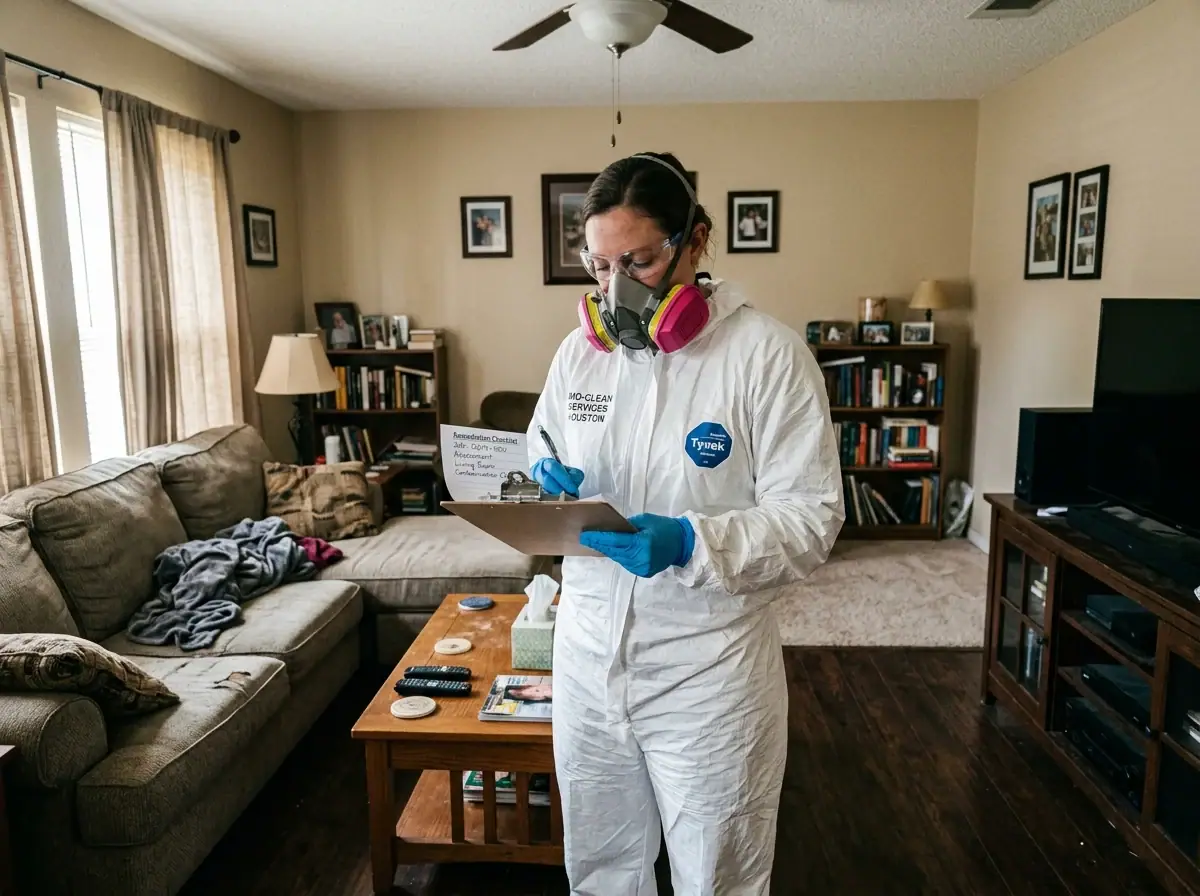
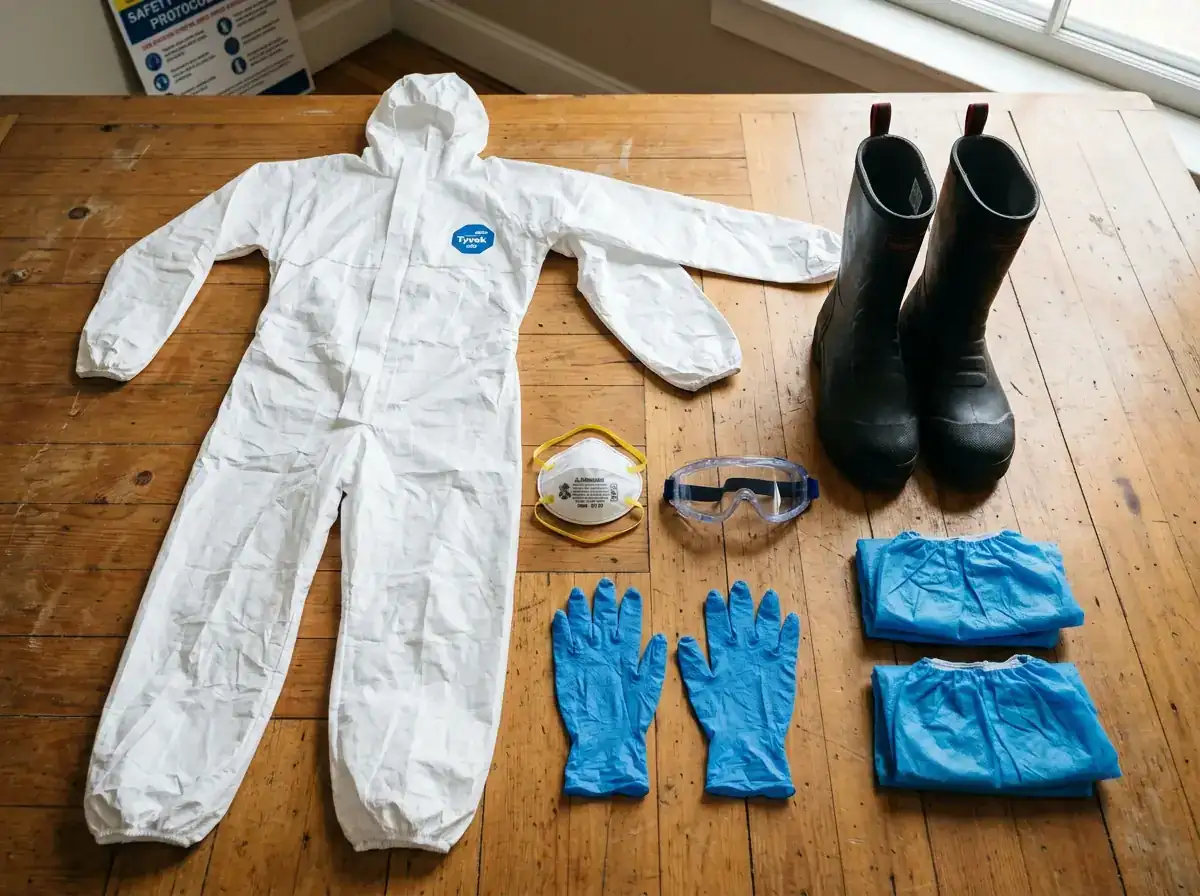
Technicians wear protective equipment selected for the job, and it is put on, taken off, and disposed of in a controlled way.
Containment, controlled walking paths, and floor protection help keep contamination from reaching clean rooms, hallways, or other vehicles.
Unaffected furniture, finishes, and belongings are covered or moved so only what truly needs removal is removed.
We keep conversations private and handle the work quietly, with respect for neighbors, tenants, and the family.
Local context
Houston's climate and building types change how contamination behaves and how quickly a response matters. These local factors shape how we plan the work.
From single-family homes on slab foundations to large apartment communities, office buildings, and a city that depends on cars, Houston presents a wide mix of properties. Each needs its own plan.
Houston's long, hot, humid summers speed up decomposition and odor, and they encourage bacterial and mold growth in damp, contaminated materials.
Many Houston homes are built on concrete slabs. Fluids that pass through carpet and pad can reach the slab, which may need cleaning and sealing before new flooring goes down.
Heavy rain, tropical storms, and past flood exposure can leave materials damp or damaged, which complicates assessment and makes it harder to tell what can be salvaged.
Apartments and rental homes raise questions about shared walls, common areas, tenant communication, and making a unit ready to lease again.
Service area
Based at 6205 Westcott St (77007), we cover all of Harris County and surrounding metros — 24 hours a day, 7 days a week.
We respond across Houston and the greater metro — from Midtown and the Inner Loop to Katy, Pearland, Sugar Land, The Woodlands, Baytown, and Pasadena. Licensed, insured, and OSHA-compliant. Insurance billing available.
(281) 473-1621 — Confirm Coverage NowWho we help
The person who calls is rarely the person who expected to deal with this. Each type of customer has different concerns, and we try to address them directly.
Often dealing with grief as well as a property. They need patience, plain explanations, and someone to handle personal belongings with care.
Want to know what can be saved, what must be removed, and whether their home insurance may help. Clear documentation matters.
Need to protect neighboring units, communicate with tenants, and understand what remains before a unit can be repaired and leased again.
Need to keep staff and customers away from affected areas, limit interruption, and have a clear record of how an incident was handled.
Vehicle owners, fleet operators, and executors settling an estate call us too. Whoever you are, the first conversation is the same: what happened, where, what materials are involved, and what you need the space to be ready for next.
Pricing
There is no honest flat price for biohazard cleanup, because no two situations are the same. The final price depends on the actual scope, which is why we explain these factors during the assessment.
A contained blood spill, a trauma scene, and an unattended death involve very different work.
One room versus several rooms, or one vehicle seat versus the full interior.
Amount of contamination, and how long it has been present, change the effort involved.
Carpet, pad, drywall, and upholstery that need removal add labor and disposal.
Belongings to clean, sort, document, or dispose of affect time on site.
Persistent odor may call for additional treatment beyond surface cleaning.
The volume and type of contaminated waste affect packaging and disposal costs.
Stairs, tight spaces, vehicles, and specialized equipment all factor in.
Some homeowner's or commercial property insurance policies may cover part of the cost, depending on the policy and the circumstances. Check your coverage directly with your insurer. Once we understand your situation, we can talk through the scope.
Questions
Answers to questions homeowners, families, property managers, and businesses often ask before a cleanup begins.
In most cases, the property owner or the party responsible for the property, such as a landlord, business, or vehicle owner, arranges the cleanup. Police, fire departments, and medical examiners generally do not clean a scene after they finish their work. For rental properties, lease terms and local rules may affect who arranges and pays for remediation.
A very small amount of blood on a hard surface can often be handled with gloves and an appropriate disinfectant. Anything larger, anything soaked into porous materials, and anything connected to a death or serious injury is better left to professionals. That protects your health and spares you a difficult experience. Our blood cleanup services page explains where that line usually falls.
Cleanup can begin once the responsible authorities have released the property. If you're unsure whether a scene has been released, ask the investigating agency before anyone enters or moves anything. We do not enter unreleased scenes.
No. We provide cleanup and remediation only. We do not investigate incidents, collect evidence, reconstruct scenes, or determine cause of death. Our crime scene cleanup services begin after authorities have completed their work.
Each item is assessed. Non-porous items can often be cleaned and disinfected. Heavily saturated porous items, such as carpet pad or mattresses, are usually removed. Personal and sentimental items are discussed with you before any decision is made, and removed items can be documented for insurance.
Odor usually comes from contaminated material that is still present. Removing that source is the most important step. Additional odor treatment may follow when needed. In unattended death cleanup, the odor may reach subfloors, walls, or air-handling systems, and addressing it can take extra work.
Yes. Vehicles need a different approach because of their layered upholstery, carpeting, and tight interior spaces. Our vehicle biohazard cleanup page covers cars, trucks, and fleet and commercial vehicles.
It depends on the scope. A contained blood spill on a hard floor may be a short job. A situation involving several rooms, saturated flooring, or extensive contents can take considerably longer, especially when materials must be removed and odor addressed. We give you a realistic expectation after the assessment rather than a guess over the phone.
Not exactly. Tear-gas residue is a chemical irritant, not biological contamination. It still needs the same careful approach: containment, surface-by-surface cleaning, and decisions about fabrics and porous items. Our specialized tear gas cleanup page explains how that work differs.
Yes. We offer 24/7 response, so you can call (281) 473-1621 at any hour, including weekends and holidays. We'll talk through what happened, what you can safely do in the meantime, and when the work can be scheduled based on the situation.
We aim to work discreetly and keep conversations about the incident private. Tell us about any specific privacy concerns during your first call, such as arrival arrangements or tenants in shared buildings, and we will discuss what is practical for your property.
Talk With the Cleanup Team
Tell us what happened in as much or as little detail as you're comfortable with. We'll explain what cleanup would likely involve, what factors affect the scope, and what you can do in the meantime. You won't be pressured, and you don't have to decide anything on the first call. We answer 24/7.
If anyone is injured or in danger, call 911 first.
Serving Houston, TX — 24/7
We respond to residential homes, apartments, businesses, and vehicles across Houston and the surrounding metro. Our team is available around the clock — call us any time and we will explain the process calmly before any work begins.