
01 · DefinitionWhat Is Professional Blood Cleanup?
Professional blood cleanup is the safe removal of blood and other body fluids from surfaces, materials, and belongings, followed by cleaning and disinfection of what can be saved and proper disposal of what cannot. It treats blood as potentially infectious material, using protective equipment and containment rather than household cleaning methods.
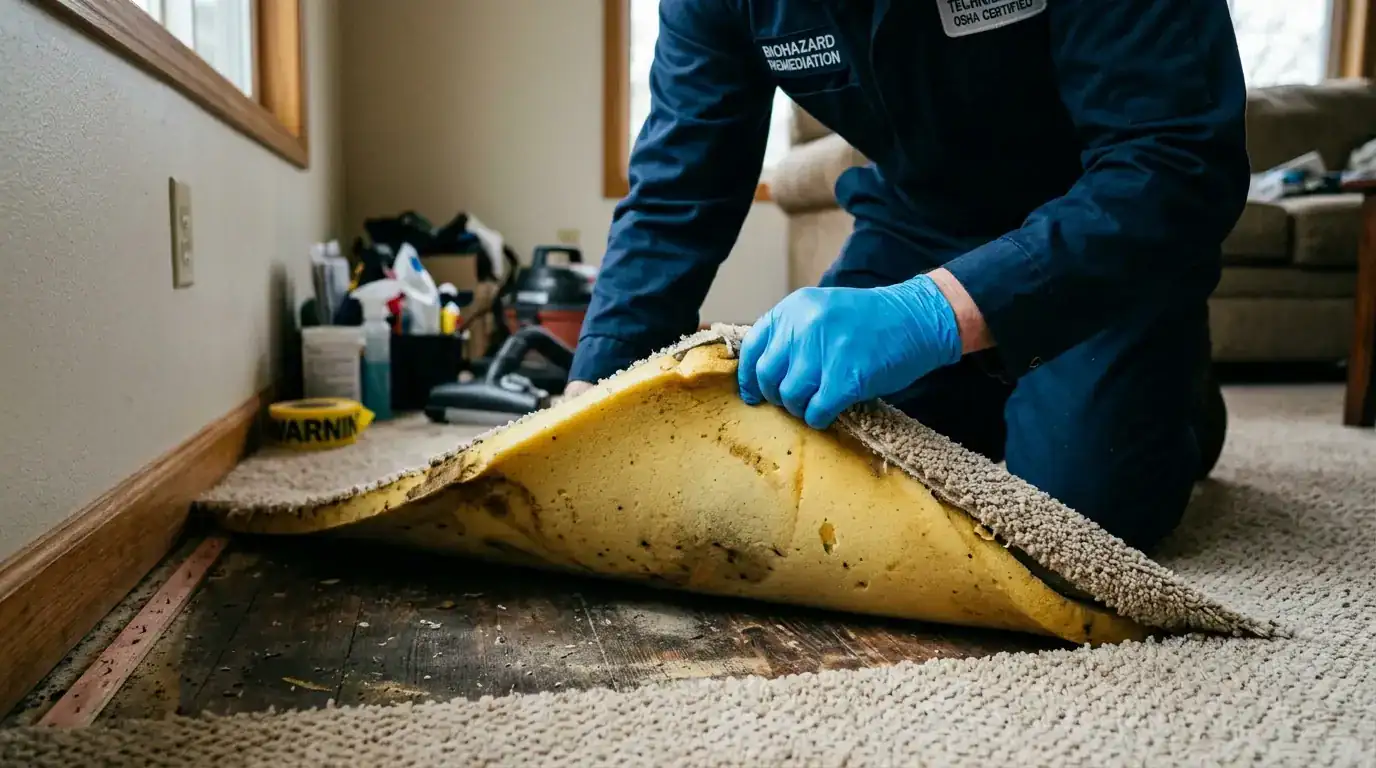
The difference between wiping up a stain and remediating blood contamination comes down to depth. On sealed tile, blood sits on the surface. On carpet it passes through the fibers, the backing, and the pad, and can reach the tack strip and slab. On a sofa it moves into the foam, where it can't be seen.
Blood that has dried is not "gone." It is harder to remove, and it may still carry bloodborne pathogens. That is why OSHA treats blood as potentially infectious material in workplace settings, and why professional cleanup starts with protection and assessment, not scrubbing.
02 · Common situationsWhere Does Blood Contamination Usually Come From?
Most blood cleanup calls come from ordinary, unplanned events. The source affects where blood has traveled and which materials are involved.
-
SOURCE 01
Household injuries and falls
A fall on a staircase or a deep cut in a kitchen can leave blood on flooring, walls, railings, and whatever the person touched while getting help.
-
SOURCE 02
Medical events at home
Nosebleeds that won't stop, ruptured wounds, or bleeding linked to illness often affect bedding, mattresses, bathroom surfaces, and hallway carpet.
-
SOURCE 03
Workplace incidents
Injuries in warehouses, shops, restaurants, and offices can contaminate floors, equipment, and shared areas that staff need to use again quickly.
-
SOURCE 04
Blood in vehicles
After an injury in or near a car, blood can soak into seats and floor carpeting. Our vehicle biohazard cleanup service covers these interiors.
When blood is part of a larger traumatic event, such as a serious accident or a scene released by authorities, the work usually falls under trauma remediation or crime scene cleanup services, which cover a broader scope.
03 · Warning signsWhy Isn't Ordinary Household Cleaning Enough?
Household cleaners are made for everyday dirt, not for biological contamination that has spread into layered materials. These signs mean a blood spill needs more than a mop and spray bottle:
- Blood has reached carpet, rugs, or upholstery. Surface cleaning may lighten the stain while contamination remains in the pad or foam.
- The stain came back after cleaning. Wicking, where residue rises from below as the material dries, is a common sign that contamination runs deeper.
- Blood has dried or been present for hours. Dried blood is harder to remove without spreading it.
- It covers more than one small area. Drips along a hallway or splatter on walls means more surfaces to find and treat.
- An odor lingers. Odor after cleaning often points to contaminated material that hasn't been found yet.
A common mistake
Mixing bleach with ammonia-based or acidic cleaners can release toxic gases. Never combine cleaning chemicals to make them "stronger."
04 · ProcessHow Does Blood Cleanup Work?
Each job is adjusted to what we find, but the sequence stays the same so contamination is removed, not moved around.
-
Inspect beyond the visible stain
We trace where blood has traveled, including under rugs, along baseboards, into seams, and beneath furniture, and note which materials are involved.
-
Set up protection and containment
Technicians put on protective equipment, and the work area is separated from clean spaces so nothing is tracked into other rooms.
-
Remove saturated porous material
Carpet pad, cushion foam, or drywall that absorbed blood is cut out and bagged. Reliable decontamination of saturated porous material is rarely possible.
-
Clean, then disinfect
Remaining surfaces are cleaned to remove residue first, then disinfected with an appropriate product applied according to its label directions and contact time.
-
Package and dispose of waste
Contaminated materials are packaged and routed for disposal based on the material and the requirements that apply to it.
-
Review what was done
We walk you through what was cleaned, what was removed, and what repairs, such as new carpet pad or drywall, are still needed.
05 · Affected materialsCan Blood Be Removed From Carpet, Furniture, and Other Materials?
Sometimes, but it depends on the material and how much blood reached it. This table shows how common materials are usually approached. The final decision is always made on site.
| Material | Typical approach | Usual outcome |
|---|---|---|
| Sealed tile, vinyl, laminate | Clean residue, disinfect, and check grout lines and seams where blood can settle. | Clean in place |
| Carpet and pad | Assess spread through fibers, backing, pad, and tack strip. The pad is almost always removed where saturated. | Often removed |
| Upholstered furniture | Surface contact may be treatable. Blood absorbed into cushion foam usually is not. | Case by case |
| Mattresses and bedding | Deep absorption is typical. These items are usually discarded when blood has soaked in. | Often removed |
| Painted walls and trim | Sealed paint can often be cleaned. Porous drywall edges and unsealed wood are examined closely. | Case by case |
| Concrete slab | Cleaned and treated where blood reached it through flooring. It may need sealing before new flooring is installed. | Clean & seal |
What happens to materials that can't be safely remediated?
They are removed, packaged, and disposed of. We talk with you before discarding personal belongings, and we can document removed items for insurance.
06 · SafetyWhat Should You Do About a Blood Spill Before Cleanup?
The safest thing is usually to do very little. Keep the area undisturbed and keep people away from it.
Do
- Keep children, pets, and visitors away from the area.
- Close off the room if you can do so without touching anything.
- Use gloves if you must move an item for immediate safety.
- Wash your hands and any exposed skin if contact occurs, and seek medical advice about any exposure.
Don't
- Don't scrub carpet or upholstery. That pushes blood deeper and spreads it.
- Don't use a household vacuum or steam cleaner on the area.
- Don't mix cleaning chemicals.
- Don't put blood-soaked items in regular trash without advice.
07 · Local factorsHow Do Houston Conditions Affect Blood Cleanup?
Blood cleanup in Houston involves a few local realities that change how quickly problems develop and how materials behave.
- Humidity slows dryingIn Houston's humid air, damp carpet pad and upholstery stay wet longer, which encourages odor and microbial growth in contaminated material.
- Carpet over slabIn many Houston homes, carpet sits directly over a concrete slab. Blood that passes through the pad reaches the slab and needs attention before new flooring goes down.
- Apartment turnoversIn the city's many rental units, property managers need contamination handled, documented, and the unit ready for repairs without affecting neighbors.
- Hot vehicle interiorsSummer heat in a parked car sets blood into fabric and foam quickly.
08 · Pricing factorsWhat Affects the Cost of Blood Cleanup?
We don't publish flat prices, because a small spill on tile and blood that has soaked through a bedroom carpet are very different jobs. These are the variables that determine scope:
- Amount of blood
- Number of surfaces and rooms
- Porous vs. non-porous materials
- Carpet, pad, or drywall removal
- Upholstery and contents
- Time since the spill
- Odor treatment
- Waste volume and disposal
- Access and location
We explain the scope and what drives it before work begins. Some property insurance policies may cover blood cleanup, depending on the circumstances, so check with your insurer.
09 · Our approachWhy Work With Us for Blood Cleanup?
- We look past the stainWe follow the blood through every layer.
- We save what can be savedNothing is removed by default.
- We explain before we startYou'll know what will be removed, and why.
- We work discreetlyQuietly, with respect for your privacy.
10 · QuestionsBlood Cleanup FAQs
Can professional cleaners handle any size of blood spill?
Yes. The work scales from a single saturated rug to contamination across several rooms. Larger jobs simply take more containment, removal, and time.
Can blood be removed from carpet?
Surface fibers can sometimes be cleaned when contact was minor. When blood has reached the pad, though, the affected carpet and pad are usually cut out and replaced. Pad acts like a sponge and cannot be reliably decontaminated. The slab or subfloor beneath is then cleaned and treated.
Can a sofa or chair with blood on it be saved?
It depends on how far the blood went. Light surface contact on some fabrics or leather may be cleanable. Blood that has soaked into cushion foam or the frame usually means the piece should be discarded. We will tell you honestly which situation you're in.
Does blood cleanup include odor removal?
Odor from blood usually comes from contaminated material that is still present, so removing that material solves most odor problems. If odor remains after cleanup, additional treatment can be discussed. Larger or longer-term situations are covered in more depth on our biohazard decontamination page.
How soon should blood be cleaned up?
Sooner is generally better. Fresh blood hasn't spread as far or set into materials, and Houston's heat speeds up odor. Keep the area undisturbed until it is assessed.