
01 · DefinitionWhat Does Trauma Cleanup Mean?
Trauma cleanup is the remediation of a space after an accident, serious injury, or medical emergency. It covers blood and other body fluids, but also the medical debris, broken items, and affected materials left behind, followed by cleaning, disinfection, and decontamination so the area can safely return to normal use.
A traumatic incident is rarely confined to one spot. The injury happens in one place, first aid in another, and the person is moved through doorways, hallways, and sometimes an elevator on the way out. Each area may need attention.
That wider footprint is what separates this work from a focused blood spill cleanup. When the incident has been handled by police, and the scene has been released for cleanup, the work is usually handled as crime scene remediation instead.
02 · Common incidentsWhich Accidents and Injuries Lead to Trauma Cleanup?
Most requests follow ordinary events that went badly. The type of incident tells us where to look and what else is likely to be involved.
-
INCIDENT 01
Serious falls
Falls from ladders, down stairs, or in a bathroom can affect flooring, railings, fixtures, and the walls a person reached for.
-
INCIDENT 02
Industrial and machinery injuries
Injuries on a shop floor or loading dock often involve equipment surfaces, concrete, pallets, and stored product nearby.
-
INCIDENT 03
Medical emergencies
A sudden medical event at home or work may leave body fluids in several rooms, plus materials used during emergency care.
-
INCIDENT 04
Accidents in shared spaces
Lobbies, stairwells, garages, and restrooms serve many people, so they must be closed off and cleared before reopening.
What types of contamination can a traumatic incident leave?
Blood is the most visible, but rarely the only concern. Other body fluids are common after serious injuries, emergency care leaves gloves, gauze, and sometimes sharps, and broken glass may carry contamination on its edges.
Leave medical debris where it is
Bandages, packaging, and any needles left after emergency care should not be gathered by hand. They are packaged as contaminated waste during cleanup.
03 · Commercial propertiesHow Is Trauma Cleanup Handled at a Workplace?
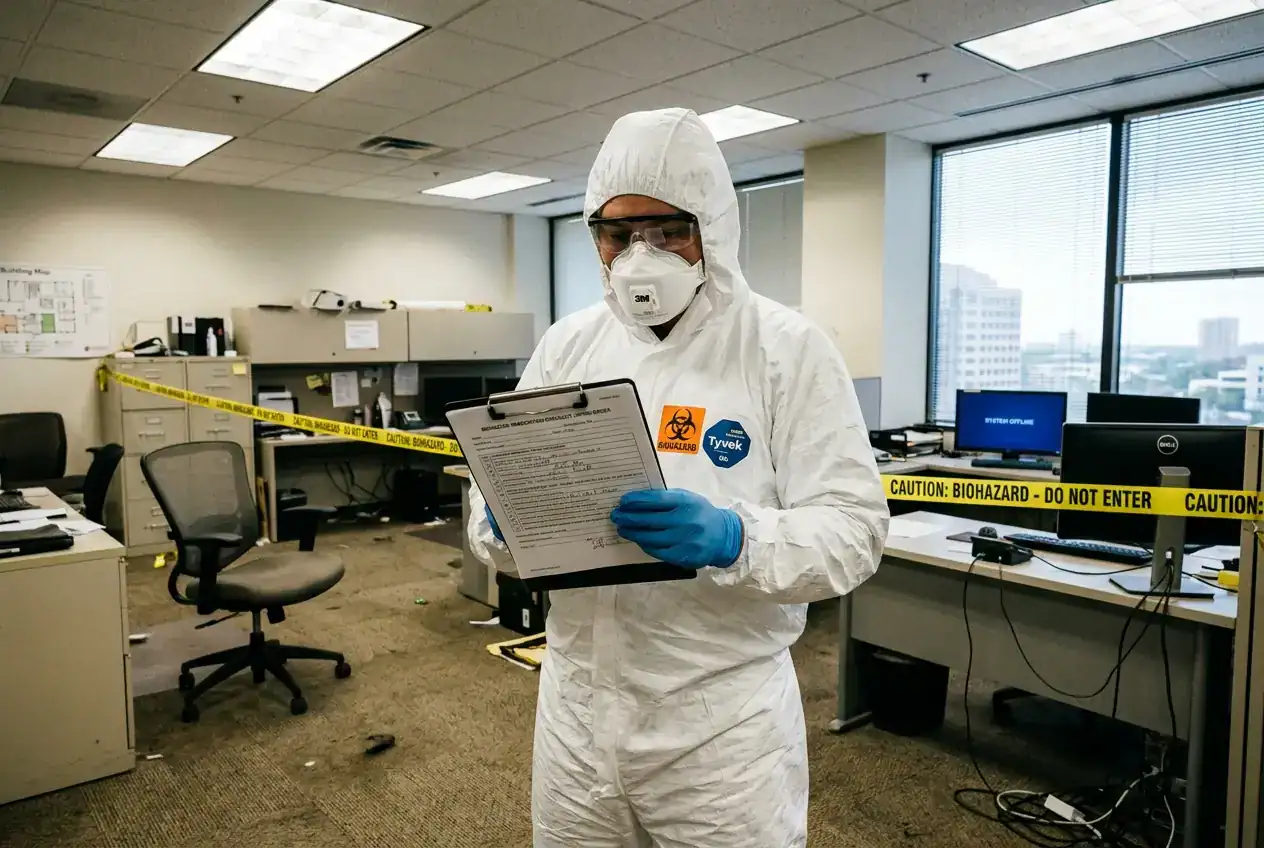
After an injury at work, managers face two questions at once: how to protect staff, and when the area can be used again. Handing employees a mop is usually the wrong answer to both.
OSHA's Bloodborne Pathogens Standard (29 CFR 1910.1030) sets out employer duties where workers have occupational exposure to blood or other potentially infectious materials. How it applies to your staff is a question for your safety lead, and it is one reason many businesses use an outside team.
| Setting | What usually matters most | What we coordinate |
|---|---|---|
| Warehouse or plant floor | Sealed or bare concrete, racking, and equipment near the incident | Which machinery stays locked out and who clears it for use |
| Retail or restaurant | Customer-facing areas and food-contact surfaces | Closing the area discreetly and a sensible reopening point |
| Office | Carpet tile, fabric chairs, and cubicle partitions | Working around staff who remain in other parts of the floor |
| Apartment or building common area | Elevators, stairwells, and hallways used by residents | Access with property management and notice to tenants |
We can provide a written summary of what was cleaned and removed for incident files or an insurer.
04 · ProcessWhat Happens During Trauma Scene Cleanup?
The order matters more than speed. Each step keeps contamination from travelling into unaffected areas.
-
Confirm the area is ready to enter
Emergency services have finished and, if police attended, the area has been released. We also check for hazards such as damaged fixtures.
-
Map the full footprint
We trace the route from the incident to the exit, including doors, handles, and elevator buttons touched along the way.
-
Isolate and protect
Affected zones are separated from clean areas, walking paths are covered, and technicians wear suitable protective equipment.
-
Clear debris, sharps, and unsalvageable materials
Medical waste, broken items, and porous materials that absorbed fluids are taken out and bagged for disposal, handled according to material type.
-
Clean, disinfect, and decontaminate
Surfaces are cleaned of residue first, then treated with a disinfectant applied according to label directions. The stages differ in purpose, as our biohazard decontamination guide sets out.
-
Walk through and hand back the space
We review the area with you, list what was removed, and note repairs needed before it goes back into service.
05 · Affected materialsWhich Materials Can Be Saved After an Accident?
Workplaces contain materials that homes often don't. This is how they are typically approached; each decision is made on site.
| Material | Typical approach | Usual outcome |
|---|---|---|
| Concrete and epoxy floors | Clean and disinfect sealed surfaces, then check joints and cracks. Bare concrete may also need sealing. | Clean in place |
| Commercial carpet tile | Affected tiles can often be lifted and replaced individually rather than the whole floor. | Tiles removed |
| Ceiling tiles, acoustic panels | Highly absorbent. Panels with contact are usually replaced. | Often removed |
| Office chairs, fabric partitions | Light contact on some fabrics may be treatable; soaked padding usually is not. | Case by case |
| Equipment exteriors, railings, metal fixtures | Non-porous surfaces are cleaned and disinfected. Internal machinery servicing stays with the owner's technicians. | Clean in place |
Personal belongings, such as a bag or jacket, are set aside for the owner. Nothing personal is discarded without a conversation first.
06 · Before cleanupWhat Should You Do After an Accident, Before Cleanup Starts?
In the first hours, your job is to keep the area closed and people out of it. Everything else can wait for the assessment.
Do
- Make sure the injured person has received care, and call 911 if anyone still needs help.
- Close off the area with a door, tape, or signage, and redirect foot traffic.
- Keep staff, tenants, customers, children, and pets out.
- Tell your insurer or property manager if you plan to report the incident.
Don't
- Don't ask employees or family members to clean up body fluids.
- Don't pick up needles, glass, or medical waste by hand.
- Don't restart machinery or reopen the area before it has been cleared.
- Don't mop across the area. It spreads contamination over a wider floor.
When is professional trauma remediation the safer choice?
- More than one room or route is involved. Contamination tracked through a building is easy to miss.
- Fluids have reached porous material. Carpet, ceiling tile, and upholstery hold more than they show.
- Sharps or medical waste are present. These need careful packaging, not a trash bag.
- The space is shared. Employees, residents, or the public will use it again.
07 · Local factorsWhat Makes Trauma Cleanup in Houston Different?
A few features of the city shape how post-incident work is planned here.
- Industrial and logistics sitesHouston has many warehouses, fabrication shops, and distribution centers, where cleanup must fit around shifts and equipment.
- Unconditioned work areasLoading docks and shop floors get very hot in summer, and heat speeds up odor from residue left in place.
- Mid-rise and high-rise buildingsShared elevators, stairwells, and lobbies mean coordinating access and timing with building management.
- Humid airCeiling tile and fabric dry slowly here, one reason contaminated porous items are removed rather than left to dry.
08 · Pricing factorsWhat Determines the Cost of Trauma Cleanup?
There is no standard price for trauma cleanup, because no two incidents cover the same area. The scope depends on:
- Size of the affected footprint
- Number of rooms and routes
- Types of body fluids involved
- Medical debris and sharps
- Porous materials to remove
- Equipment and fixtures to clean
- After-hours or phased work
- Odor treatment
- Disposal volume
We explain the scope before starting. Commercial or property insurance may respond depending on the policy, so ask your insurer early.
09 · QuestionsTrauma Cleanup FAQs
What is trauma cleanup, and when is it needed?
It is the professional cleanup of a space after a serious fall, workplace injury, medical emergency, or similar incident. It is needed when body fluids, medical waste, or contaminated materials remain in an area people will use again.
What kinds of contamination does trauma cleanup deal with?
Blood, vomit, urine, and other body fluids, plus first-aid materials, sharps, and broken items that contacted fluids. The mix varies with the incident, so assessment comes first.
Does trauma cleanup include blood removal?
Yes. Blood is part of almost every trauma job. If the only issue is a contained spill with no wider footprint, our blood cleanup services page covers that narrower job.
What happens to contaminated items that can't be cleaned?
They are bagged and sent for disposal in the way each material calls for, following whatever rules apply. We list business property and personal items first, so owners and insurers know what was taken.
How is the area decontaminated before people use it again?
After contaminated material is removed, remaining surfaces are cleaned to take off residue, then disinfected with a suitable product, following its label directions and contact time. We then do a final walk-through with you before the space reopens.