
01 · Short answerCan a Vehicle With Blood Contamination Be Cleaned?
In many cases, yes. Vehicle biohazard cleanup removes blood and other body fluids from a car or truck interior, takes out components that cannot be reliably decontaminated, such as saturated seat foam or carpet padding, and then cleans and disinfects the remaining surfaces. Whether a given vehicle is worth restoring is a decision for the owner and, where involved, the insurer.
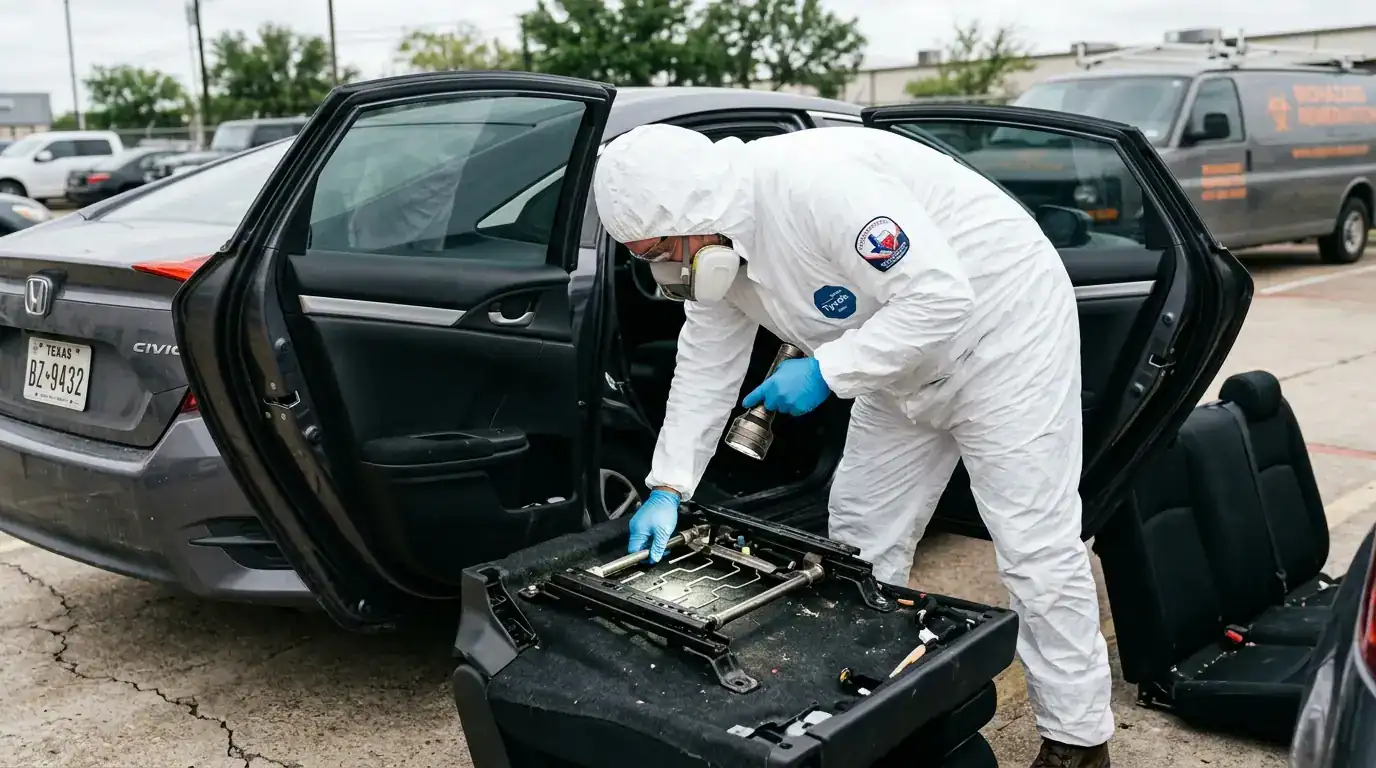
Vehicle decontamination in Houston is different from cleaning a room. There is no slab to reach and no drywall to cut. Instead there are seat cushions bolted to rails, carpet molded to the floor pan, and dozens of seams where fluids collect out of sight.
The principles are the same ones behind our professional blood cleanup in homes and businesses. What changes is the layout, the materials, and the need to protect a vehicle's electrical and safety components while working.
02 · Interior zonesWhich Parts of a Vehicle Interior Can Be Affected?
We assess a vehicle zone by zone, because each part of the cabin is built differently. This is how the main zones are usually handled. The final call is made during inspection.
| Zone | What we check | Usual outcome |
|---|---|---|
| Seat covers | Leather and vinyl can often be cleaned. Fabric depends on how far fluid passed through. | Case by case |
| Seat foam | Foam absorbs like a sponge. Saturated sections are removed rather than treated. | Often removed |
| Seat rails and under-seat area | Tracks, springs, and wiring harness covers where fluid runs down and pools. | Clean in place |
| Carpet, pad, and floor pan | Carpet and its backing padding are lifted to reach the metal pan and drain plugs beneath. | Often removed |
| Seat belts | Webbing absorbs fluid. Replacement of these safety parts is usually referred to a qualified repair facility. | Often replaced |
| Headliner | Fabric over a fiber board. Light contact may clean; soaked areas generally need replacing. | Case by case |
| Dash, console, door panels | Hard plastics are cleaned, including seams, vents, and switch surrounds. | Clean in place |
| Cabin air and HVAC | The cabin air filter is checked and usually replaced; vents and intake areas are assessed for residue. | Case by case |
03 · Why vehicles differWhy Is a Car Harder to Decontaminate Than a Room?
Car biohazard cleanup in Houston runs into four problems that houses rarely present.
-
FACTOR 01
A sealed air space
With the doors closed, odor and moisture have nowhere to go, and they build up in the foam and headliner.
-
FACTOR 02
Layers over metal
Fabric, foam, jute padding, and sound deadening sit on steel. Fluid passes down through them and sits on the pan.
-
FACTOR 03
Hidden gaps
Console seams, trim clips, buckle housings, and the gap between seat and backrest hold residue out of view.
-
FACTOR 04
Electrical and safety parts
Seats and panels may contain wiring, sensors, and airbag components, so surfaces are never flooded with liquid.
What types of vehicles can be serviced?
We work on personal cars, SUVs, and minivans; pickup trucks; cargo and passenger vans; and fleet or commercial vehicles such as company cars, service trucks, and delivery vans. For fleets, we can discuss handling more than one vehicle and keeping a record for each. If you're unsure whether your vehicle fits, describe it and we'll tell you plainly.
Where the work happens
We'll discuss where the vehicle can be serviced. The spot needs room to open every door, safe access, and, for a towed or stored vehicle, permission from whoever holds it.
04 · ProcessHow Does Vehicle Decontamination Work?
The steps follow the vehicle from the outside in and from the top down, so cleaned areas are not contaminated again.
-
Document the interior
We photograph and note the affected zones before anything is moved. Owners, fleet managers, and adjusters often want that record.
-
Ventilate and set up protection
Doors are opened, the surrounding ground is covered, and technicians put on protective equipment.
-
Remove belongings and loose items
Personal items, documents, and child seats are bagged separately for the owner to review, not discarded.
-
Take out unsalvageable components
Saturated foam, carpet padding, floor mats, and the cabin air filter are removed and packaged for disposal as the material requires.
-
Clean and disinfect what remains
Hard surfaces, rails, and the floor pan are cleaned of residue, then disinfected with a product applied according to label directions. Our biohazard decontamination page explains why cleaning always comes first.
-
Hand over with a clear parts list
You receive a summary of what was cleaned and removed, and which parts, such as a seat cushion or belt, need replacing by a repair or upholstery shop.
05 · Odor & Houston heatHow Do Houston Summers Affect a Contaminated Vehicle?
Heat is the biggest local factor in vehicle contamination. A parked car in a Houston summer gets far hotter inside than the air outside, and that changes both the timeline and the odor.
- Cabin heat sets residueHigh interior temperatures dry fluids into fabric and foam and make odor build faster.
- Humidity under the carpetMoisture trapped between padding and the floor pan dries slowly in humid weather, keeping odor and microbial growth going.
- Everyday reliance on the carMost Houstonians depend on a vehicle for long commutes, so the pressure to drive it before cleanup is real. It's better to wait.
- Tow and storage lotsA vehicle held outdoors in the sun for days usually needs a wider scope than one moved into shade quickly.
Does vehicle cleanup include odor?
Yes, but odor is treated as a symptom. In most vehicles it traces back to contaminated material left in the cabin, so removing the source does most of the work. The cabin air path is checked because a car's ventilation can pull odor back through the vents. Any further odor treatment is discussed once the source is gone.
06 · Before cleanupWhat Should You Do With a Contaminated Vehicle Before Cleanup?
Leave the interior as it is. The less that is touched, the less spreads into clean parts of the cabin.
Do
- If the vehicle can be moved safely without contact, park it in shade or a garage.
- Keep the doors closed and keep children and pets out.
- Wear disposable gloves if you must retrieve keys, a phone, or documents.
- If police or an insurer are involved, confirm the vehicle is released for cleanup.
Don't
- Don't drive the vehicle while the interior is contaminated.
- Don't use a wet-vac, steam cleaner, or carpet extractor on the seats.
- Don't run the air conditioning to "air it out." It can draw odor into the vents.
- Don't unbolt seats or pull trim yourself; airbag and sensor wiring may be underneath.
- Don't hand it to a standard detailer without telling them what happened.
07 · Pricing factorsWhat Affects the Cost of Vehicle Biohazard Cleanup?
A spot on a leather seat and a fully affected cargo van are very different jobs, so we price each vehicle on its own scope. The main variables:
- Vehicle size and type
- Number of zones affected
- Fabric vs. leather or vinyl
- Foam and carpet removal
- Time since contamination
- Heat exposure
- Cabin air system
- Odor treatment
- Number of fleet vehicles
- Service location
We don't decide whether a vehicle is repairable or a total loss; that sits with the owner and insurer. What we can supply is clear documentation of the contamination and the work, which insurers or adjusters may want to see.
08 · QuestionsVehicle Biohazard Cleanup FAQs
Can car seat upholstery be decontaminated?
Often, when contact stayed on the surface. Leather and vinyl respond well to cleaning and disinfection. With fabric, the question is whether fluid reached the foam underneath; if it did, that section of foam is replaced even if the cover can be saved.
Can contaminated carpeting be removed from a car or truck?
Yes. Vehicle carpet is a molded piece that can be lifted or cut out once seats and trim are loosened. That also gives access to the floor pan, which is cleaned and disinfected before replacement carpet goes in.
Will the smell come back after the vehicle is cleaned?
Odor that returns usually means a source was missed, such as foam under a seat or padding at the edge of the carpet. That is why removal comes before any odor treatment and why the cabin filter is replaced.
Do you work on fleet and commercial vehicles?
Yes. Company cars, service trucks, and vans are handled the same way as personal vehicles, with a separate record for each unit so fleet managers can track what was done.
Is it safe to drive the car again after cleanup?
Once remediation is complete and any removed safety parts, such as belts, have been replaced by a qualified shop, the interior is ready for normal use. We'll tell you exactly which parts still need replacing.