
01 · OverviewWhat Does Suicide Cleanup Involve?
Suicide cleanup is the professional remediation of a room or property after a suicide, once the authorities have released it. Trained technicians remove biological contamination, clean and disinfect affected surfaces, take out materials that cannot be restored, address odor, and handle personal belongings with care, so the family does not have to do this work themselves.
When the medical examiner and first responders leave, their part is finished. The room is usually left as it was, and the responsibility for what comes next falls to the family, the property owner, or a landlord.
Many relatives feel they should handle it privately. That instinct is understandable, but this is not a task anyone should carry alone. Suicide scene cleanup lets someone outside the family take on the physical work with patience and discretion.
Support is available
If you or someone close to you is struggling after this loss, the 988 Suicide & Crisis Lifeline is free and confidential. In the U.S., call or text 988 at any time.
02 · First stepsWhat Should Family Members Do Before Cleanup?
Very little is expected of you at this stage. A few simple steps protect your family and keep options open for the belongings in the room.
Do
- Wait until the authorities confirm the property has been released.
- Close the door to the affected room and keep children and pets out.
- Collect essentials, like medication or documents, only from unaffected rooms.
- Make a note of any keepsakes you hope to recover, so we can look for them.
- If you rent, let your landlord or property manager know.
Don't
- Don't try to clean the room yourself or ask friends to help with it.
- Don't throw belongings away in haste, even items that look affected.
- Don't use bleach, household sprays, or air fresheners in the area.
- Don't move furniture or pull up flooring before an assessment.
- Don't feel you must be present while the work is done.
03 · Why it mattersWhy May Professional Cleanup Be Necessary?
The reasons are partly practical and partly personal. Both deserve weight.
-
REASON 01
The emotional toll
Cleaning the space where a loved one died can leave lasting memories. Handing the work to a team you trust is a reasonable choice, not a failure.
-
REASON 02
Contamination you can't see
Body fluids can settle into seams, under baseboards, and behind furniture. A surface that looks clean may still hold residue.
-
REASON 03
Health and exposure
Blood and other fluids can carry bloodborne pathogens, so the work calls for protective equipment and controlled handling.
-
REASON 04
Removal and disposal
Affected materials have to be packaged and disposed of appropriately, depending on the material, rather than left at the curb.
04 · ProcessHow Is the Room Restored, Step by Step?
We keep each stage calm and predictable, and we tell you what to expect before anything starts.
-
A quiet first conversation
You share what you're comfortable with about the property and who we should coordinate with. No detailed account is needed.
-
Walkthrough and plan
We assess the affected area and explain the plan in plain terms. A relative, landlord, or trusted friend can join the walkthrough.
-
Protect the rest of the home
Technicians wear protective equipment and separate the work area so contamination is not carried into hallways or other rooms.
-
Set personal items aside
Photographs, papers, jewelry, and other belongings are gathered and kept apart first.
-
Remove what cannot be restored
Porous materials that absorbed contamination, such as carpet pad or a section of drywall, are cut out, bagged, and routed for disposal.
-
Clean, disinfect, and treat odor
Remaining surfaces are cleaned first, then disinfected with products applied according to label directions. Odor is treated at its source.
-
Final review with you
We explain what was cleaned, what was taken out, and which repairs remain, such as new flooring or paint.
If blood reached other parts of the home, our blood and body-fluid cleanup work extends to those areas as part of the same visit.
05 · Personal belongingsWhat Happens to Personal Belongings and Keepsakes?
Items in the room often matter deeply to a family. Our rule is simple: belongings are set aside and discussed before anything is discarded.
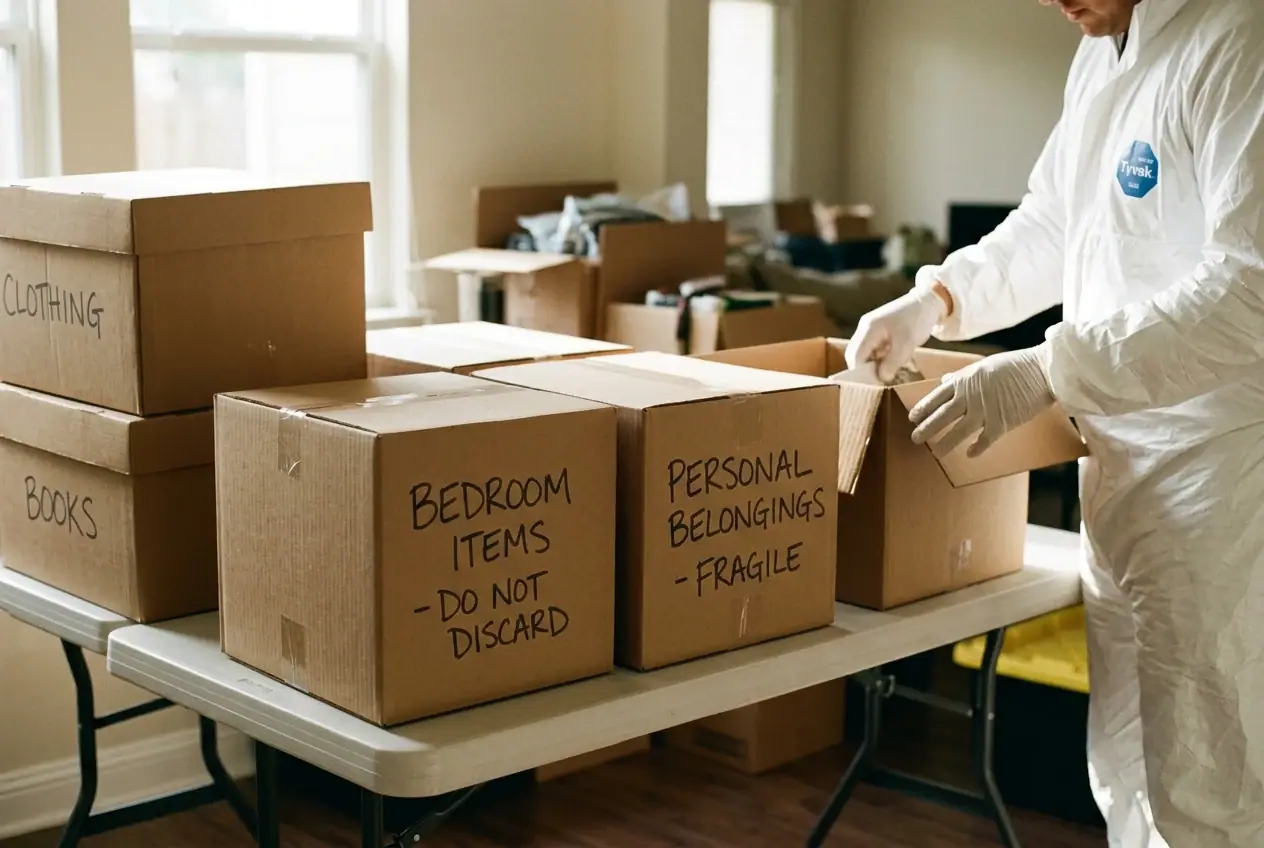
- Hard items such as jewelry, watches, frames, and keys can often be cleaned and returned.
- Papers and photographs are handled individually. Some can be kept; others may need a family decision.
- Clothing and fabrics that absorbed fluids usually can't be restored, but we ask before disposing of anything with personal meaning.
- Electronics are assessed case by case, depending on where contamination reached.
If you would rather not see certain items again, tell us. We can handle them according to your wishes and give you a written list of what was removed.
06 · Affected materialsCan Affected Porous Materials Be Cleaned?
Hard, sealed surfaces can usually be cleaned and disinfected in place. Porous materials absorb fluids below the surface, and that makes restoring them far less certain. Each decision is made on site.
| Material | What we look at | Likely result |
|---|---|---|
| Tile, stone, sealed wood | Grout lines, joints, and edges where residue can collect. | Clean in place |
| Carpet and pad | How far fluids passed through the fibers and into the pad beneath. | Often removed |
| Drywall and baseboards | Paint finish, unsealed edges, and the wall cavity behind trim. | Case by case |
| Mattress, sofa, armchair | Whether contamination reached foam or padding inside the piece. | Often removed |
How is odor addressed?
Odor almost always comes from affected material that is still in the room. Removing that material is the main step. Once the source is gone, we can treat any remaining odor in the air and on surfaces, and we'll tell you if an area such as a closet or vent needs more attention.
For a closer look at how surfaces and contents are treated after material removal, see our overview of decontamination for affected rooms.
07 · Local factorsWhich Houston Conditions Affect the Work?
- Humid air holds odorMoist indoor air keeps absorbent materials damp longer, so odor settles into fabrics and drywall sooner.
- Homes closed in the heatA house left closed with the air conditioning off can become very warm in a Houston summer, which can widen the area that needs attention.
- Apartments and condosIn multi-unit buildings we coordinate access and timing with management and keep the work contained to the unit.
- Family who live elsewhereRelatives are not always nearby. Tell us who should be the point of contact, and we will discuss how best to keep family informed.
08 · Our approachHow Do We Respect Your Privacy and Time?
- You can stay awayA key handover or a contact on site is enough for us to begin.
- We aim to work discreetlyWe keep conversations with neighbors to a minimum and share details only with the people you name.
- Belongings come firstKeepsakes are gathered before any removal begins.
- Plain, honest updatesYou'll hear what we found and what remains, without pressure.
09 · Pricing factorsWhat Affects the Cost of Suicide Cleanup?
There is no single price, because every room and situation differs. These factors shape the scope:
- Size of the affected area
- Number of rooms involved
- Flooring and drywall removal
- Furniture and mattresses
- Belongings to sort and document
- Time before cleanup began
- Odor treatment
- Disposal of removed materials
We explain the expected scope before starting. Homeowner's or renter's insurance may cover some or all of the cost, depending on the policy, and we can provide a written record of the work to share with your insurer.
10 · QuestionsSuicide Cleanup Questions Families Ask
Why can't the family simply clean the room themselves?
Some families consider it. Contamination is often hidden in flooring or wall edges, and handling it safely requires protective equipment and proper disposal. There is also the personal cost of doing this work so soon after a loss.
Can a carpet, mattress, or chair be cleaned and kept?
Sometimes. Light contact on the surface of a sealed or tightly woven material may be cleanable. When fluids have reached the pad, foam, or padding inside, the item usually needs to be removed. We explain the reason for each recommendation before acting on it.
Will the odor be gone when you finish?
In most rooms, odor fades substantially once affected materials are removed and surfaces are treated. If any remains at the final review, we'll find its source and discuss next steps.
Does a family member need to be there during the work?
No. Many families prefer not to be. A relative, friend, or property manager can let us in, and we can share updates by phone or message. You can also visit briefly at the end to review the space.
What if other parts of the property were affected too?
We can address every affected space as one project. When a situation involves serious injury beyond a single room, our trauma scene cleanup service covers the broader scope.