
01 · DefinitionWhat Is Crime Scene Cleanup, and When Does It Begin?
Crime scene cleanup is the remediation of a property after the responsible authorities have released it. It covers removing blood and body fluids, taking out contaminated materials that cannot be treated, cleaning and disinfecting what remains, and dealing with related residue and odor. The work is restorative only: it starts after investigators have finished and plays no part in the investigation.
Many people assume the police or the medical examiner's office will clean up before they leave. They generally don't. Once a scene is released, the homeowner, landlord, or business is usually the one left to arrange remediation.
Crime scene remediation in Houston is about the whole affected area, not a single stain. Contamination concentrated in one room can be carried down a hallway on shoes, onto door handles, or into a car parked outside.
Our role, stated plainly
We are a cleanup and remediation service. We do not investigate, handle evidence, or offer any view on what happened. If you are unsure whether a property has been released, confirm with the investigating agency before anyone goes inside.
02 · Common scenesWhat Kinds of Scenes Call for Crime Scene Cleaners?
The scenes vary widely. What they share is biological contamination, and often property damage, that the owner now has to resolve.
-
SCENE 01
Assaults inside a home
Contamination often spreads across several rooms as people moved or were treated by responders, reaching floors, walls, and doorways.
-
SCENE 02
Break-ins involving injury
An injury on broken glass can leave blood on window frames, sills, and the route through the house, alongside damage that needs repair.
-
SCENE 03
Incidents at a business
Shops, restaurants, offices, and parking areas need affected zones remediated before staff and customers return, with a clear record of the work.
-
SCENE 04
Scenes involving a death
When a violent incident ends in a death, the work carries more weight for the family. Our page on homicide scene cleanup explains how that is approached.
Not every call involves a crime. An accident or serious injury at home is usually handled through our trauma cleanup service, which follows a similar method.
03 · After releaseWhat Is Usually Left Behind After Investigators Leave?
Owners returning to a released property typically find a mix of biological contamination and non-biological mess. Each needs a different approach.
| What you may find | Why it matters | Usual handling |
|---|---|---|
| Blood and body fluids | Can carry bloodborne pathogens and soak below the visible surface of carpet, wood, and upholstery. | Clean or remove |
| Fingerprint dusting powder | Not biological, but it smears when wiped dry and can permanently mark fabric and unsealed finishes. | Clean in place |
| Broken glass and debris | Sharp material with contamination on it is both a cut hazard and a biological one. | Removed |
| Tracked contamination | Footprints and handprints on floors, stair rails, light switches, and door hardware widen the affected area. | Clean & disinfect |
| Nearby contents | Bedding, rugs, and furniture close to the area may be contaminated without looking it. | Case by case |
| Odor | Usually a sign that contaminated material is still present somewhere in the space. | Source first |
04 · ProcessHow Is a Scene Remediated Once It Has Been Released?
Working in a fixed sequence keeps contamination from being carried into rooms that were never involved.
-
Confirm release and access
We check that the property has been released and agree on how the team will arrive, keeping the visit low-key for neighbors or staff.
-
Walk the full affected area
The walk-through covers the main room and every route people used afterward, including hallways, stairs, and entry points.
-
Contain and protect
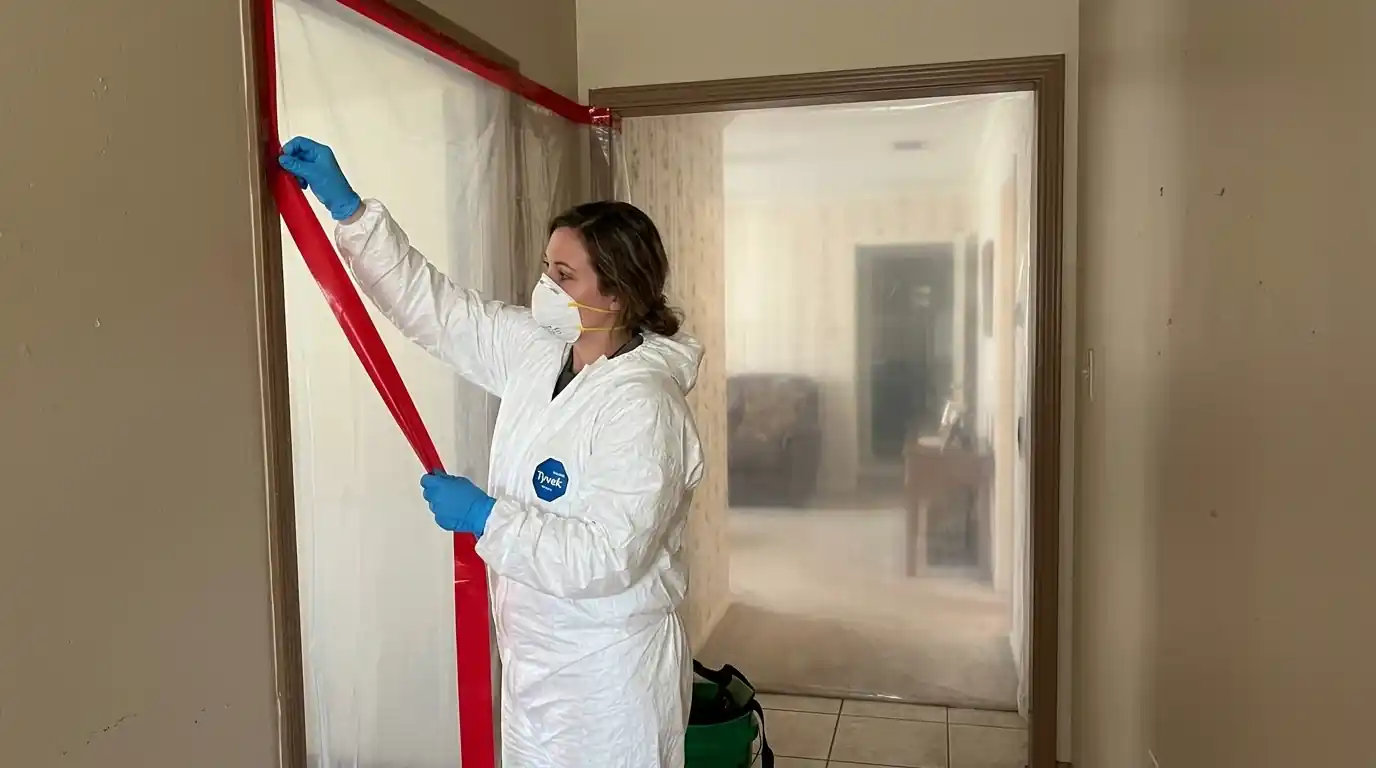
Work zones are sealed off from the clean parts of the property, and floor protection marks a controlled path in and out.
-
Remove what cannot be treated
Saturated carpet and pad, affected sections of drywall, and porous items beyond recovery are cut out, bagged, and labeled for disposal.
-
Clean, disinfect, and clear residue
Surfaces are cleaned of visible contamination and powder, then disinfected with products applied according to label directions. Odor is traced to its source rather than masked.
-
Final review and records
We walk you or your representative through the result and summarize the work and any removed items, which insurers, landlords, or business owners often ask for.
05 · Affected materialsWhich Surfaces and Contents Are Typically Affected?
Whether a material can be saved depends mostly on one thing: whether it absorbs fluid.
Porous materials
Carpet, pad, mattresses, upholstered furniture, drywall, and unfinished wood take fluid into their structure. Once saturated, removal is usually the only dependable option. Personal belongings are always discussed with you before anything is discarded.
Hard, sealed surfaces
Tile, sealed stone, glass, metal, and painted trim can usually be cleaned and disinfected where they are. The joints between them, such as grout lines, baseboard gaps, and window tracks, get the closest attention.
For a closer look at how individual materials respond, see our page on blood and body-fluid cleanup. When a space needs focused treatment after gross contamination is gone, our biohazard decontamination services cover that stage.
06 · SafetyWhat Should You Do, and Avoid, Before the Cleanup Team Arrives?
Your main job is to leave the area as it is and keep people out of it.
Do
- Confirm with the investigating agency that the property has been released.
- Keep family members, children, pets, and employees out of affected rooms.
- Photograph damage from a doorway, without entering, if you plan to make a claim.
- Contact your insurer and, if you rent, your landlord or property manager.
Don't
- Don't enter or clean any area that has not been released.
- Don't try to remove dried blood or dusting powder yourself. Scrubbing spreads both.
- Don't put contaminated items in household trash or a building dumpster.
- Don't cover odor with air fresheners. They hide where the source is.
Workplaces have added duties
Employers whose staff could be exposed to blood have obligations under OSHA's Bloodborne Pathogens Standard (29 CFR 1910.1030). Asking untrained employees to clean up after an incident can create the kind of exposure that standard exists to control.
07 · Local factorsWhat Houston Factors Affect Crime Scene Cleanup?
A handful of local conditions come up repeatedly on released scenes around the city.
- Waiting in the heatA property may stay closed while an investigation continues. In a Houston summer, with the air conditioning off, odor develops faster in contaminated material.
- Apartment common areasIn large apartment communities, contamination can reach shared stairwells, breezeways, and elevators that other residents use every day.
- Businesses that need to reopenStores, restaurants, and offices usually need affected areas remediated before reopening, without disturbing neighboring tenants.
- Humidity and absorbent materialsDamp carpet pad and upholstery dry slowly in humid air, which makes prompt removal of saturated materials more important.
08 · Pricing factorsWhat Determines the Cost of Crime Scene Cleanup?
There is no standard price for a released scene. We scope each job on site and explain the variables before any work starts:
- Size of the affected area
- Rooms and routes involved
- Carpet, drywall, or furniture removal
- Dusting powder and other residue
- Contents to sort or discard
- Time since the incident
- Odor treatment
- Waste packaging and disposal
- Commercial or multi-unit access
Homeowner's, renter's, or commercial property insurance may cover part of the cleanup, depending on the policy. Texas also runs a crime victims' compensation program through the Office of the Attorney General; ask the program directly whether cleanup expenses may qualify in your situation.
09 · Our approachWhat Can You Expect From Our Team?
- A discreet visitWe keep the work low-profile and conversations private.
- No questions about the incidentWe need to know what is affected, not what happened.
- Scope before workYou see what will be removed, and why, before we begin.
- Clear boundariesWe remediate. Investigation stays with the authorities.
10 · QuestionsCrime Scene Cleanup Questions
What does crime scene cleanup involve?
Assessing the released area, containing it, removing materials that cannot be saved, cleaning and disinfecting what remains, clearing residue such as dusting powder, and disposing of waste appropriately. The scope depends on how far contamination spread.
Can crime scene cleaners remove blood from every surface?
From sealed, non-porous surfaces, usually yes. On absorbent materials, taking out the affected section is often more reliable than cleaning it. Where blood has reached subflooring or framing, those areas are cleaned and may be sealed before repairs.
When can cleanup begin after a crime?
Only after the responsible agency has released the property. Investigators set that timing, not the cleanup company. Once you have confirmation, remediation can be scheduled, and starting sooner generally means less spread and less odor.
Does crime scene cleanup include odor remediation?
Yes, where odor is present. Most odor comes from contaminated material still in the space, so removing that source comes first. If odor persists, further treatment can be discussed.
What happens to contaminated materials after removal?
They are bagged, labeled, and routed for disposal based on the material and the requirements that apply to it. Personal belongings are never thrown out without your agreement.